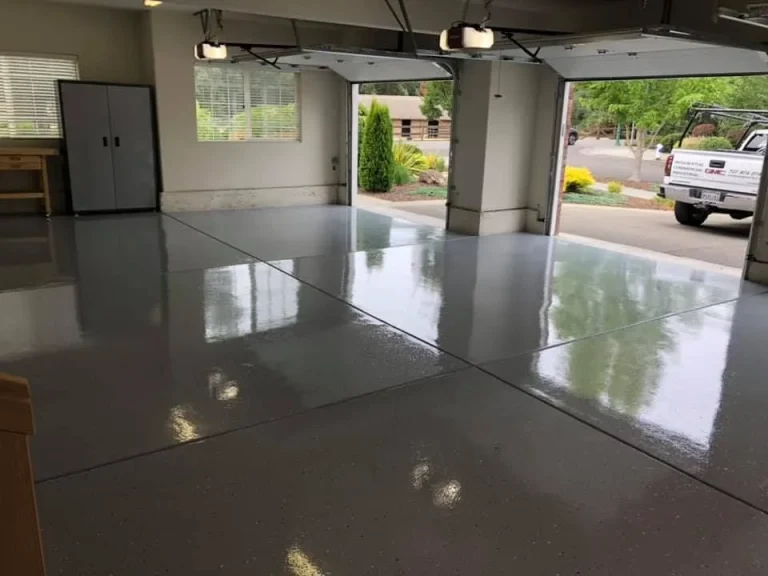
Garage floor coatings seal concrete against stains and dust and make cleaning easy. They last when the concrete is properly cleaned, repaired and prepared first. Skipping prep is the main reason coatings peel.
What a coating does
- Seals the concrete so oil, salt and spills sit on top instead of soaking in.
- Stops dust from the surface of the slab.
- Brightens the space by reflecting light.
- Makes cleaning simple. Most messes wipe or mop right up.
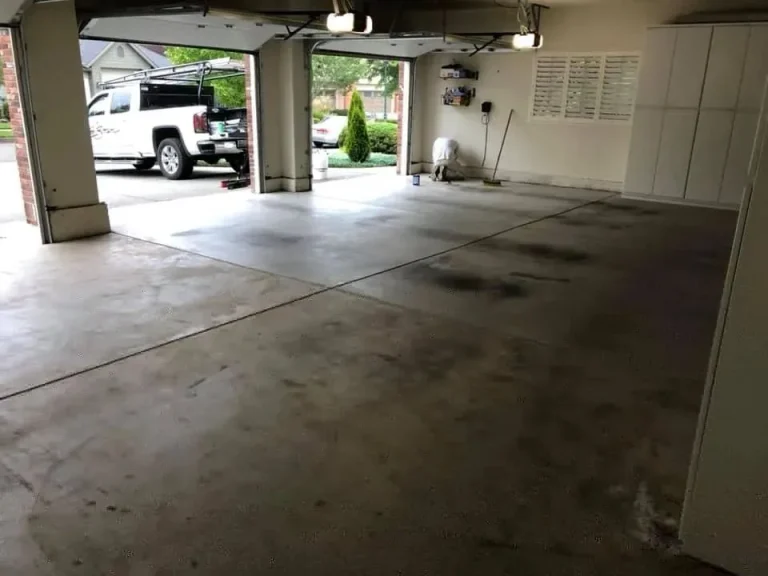
Prep is the whole job
Coatings fail when they cannot grip the concrete. That usually comes down to prep:
- CleanRemove oil, grease and old sealers so nothing sits between the slab and the coating.
- RepairFill cracks and chips so the finished floor is smooth.
- ProfileOpen up the surface of the concrete so the coating can bond.
- DryMake sure the slab is dry enough to coat.
- CoatApply the coating evenly and give it time to cure before cars come back.
Is it worth it for your garage?
If you use the garage as a workshop, a gym, a laundry area or just want it to feel finished, a coating makes a real difference. It is also worth considering before selling, since a clean garage floor looks great to buyers. If the slab has serious moisture problems, that needs to be addressed first.
Make it part of a bigger refresh
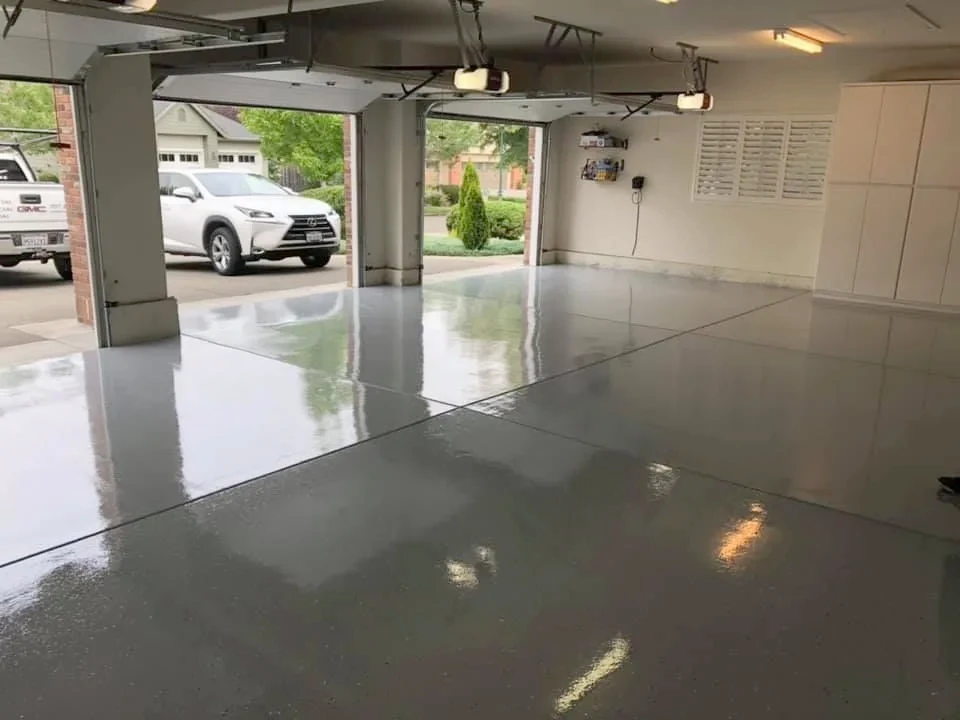
Many people paint the garage walls, doors and trim at the same time. Fresh walls and a coated floor turn a dark storage space into a clean, bright room.
You can see a garage floor before and after on our before and after page. When you are ready, request a free estimate and we will look at your slab.
Common questions
How long do I have to stay off the floor?
It depends on the product and the weather. We will give you a clear timeline for foot traffic and for parking cars.
Can you coat a floor with cracks?
Yes. Cracks and chips are filled and smoothed as part of the prep.
Is a coated floor slippery?
Coated floors can be slick when wet. Texture can be added to the finish to improve grip.