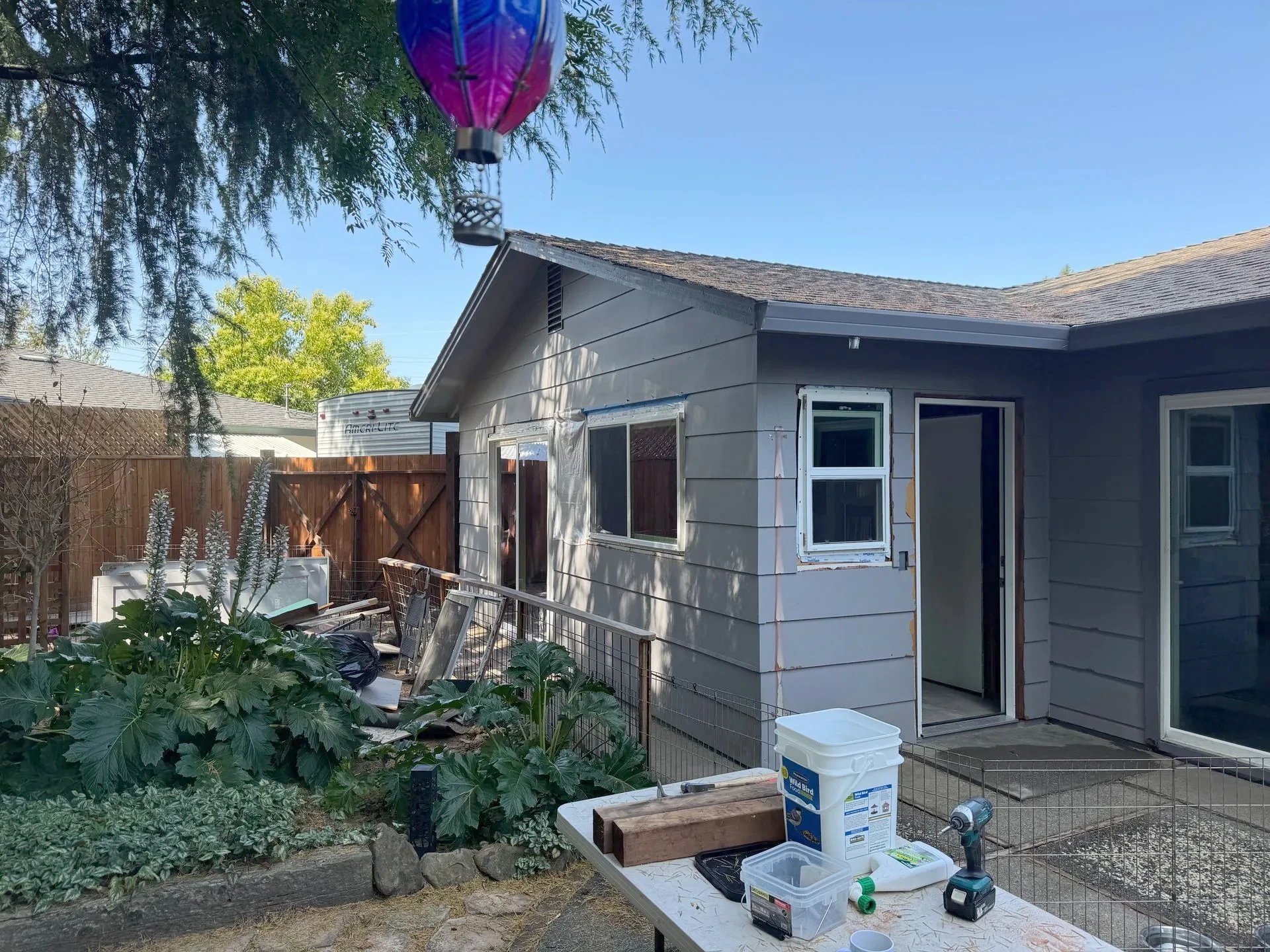
A proper exterior prep includes washing, scraping loose paint, repairing damaged wood, caulking gaps, priming bare spots and protecting everything that should not get paint on it. Skip any of these and the new finish will not last as long as it should.
1. Washing
Paint needs a clean surface to grip. Dirt, pollen, mildew and the chalky film that old paint leaves behind all sit between the wall and the new coat. Paint applied over that layer is only stuck to the dirt.
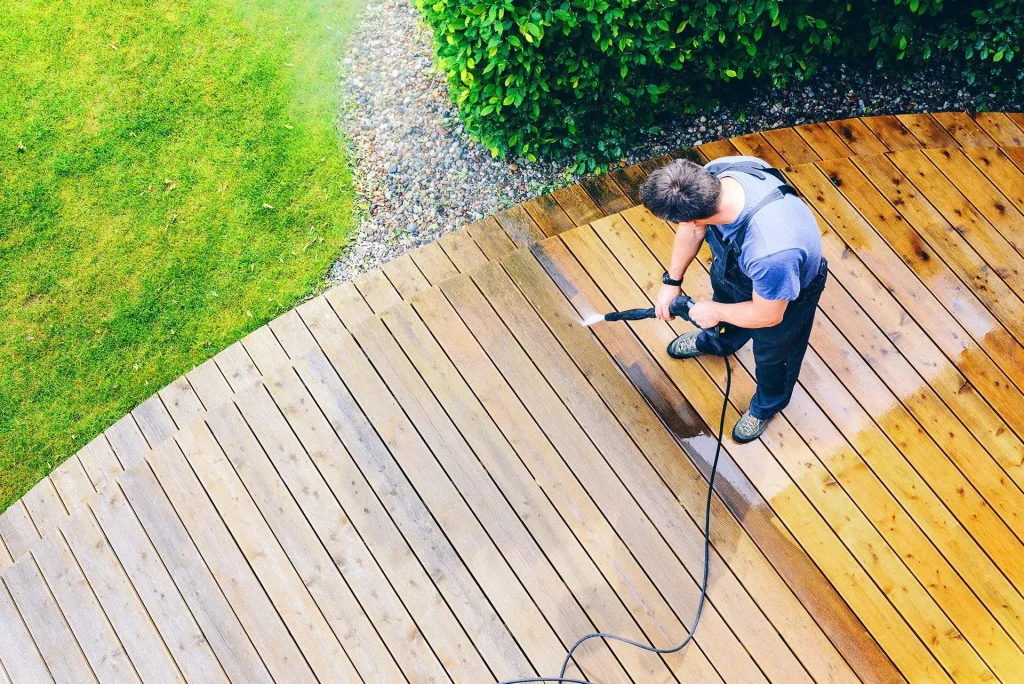
The trick is using the right pressure for each surface. Wood, stucco and concrete all need a different approach, and everything has to dry completely before painting starts.
2. Scraping and sanding
Any paint that is loose has to come off. If it is lifting now, it will lift later and take the new paint with it. After scraping, the edges get sanded smooth so the old paint lines do not show through the new finish.
3. Repairs
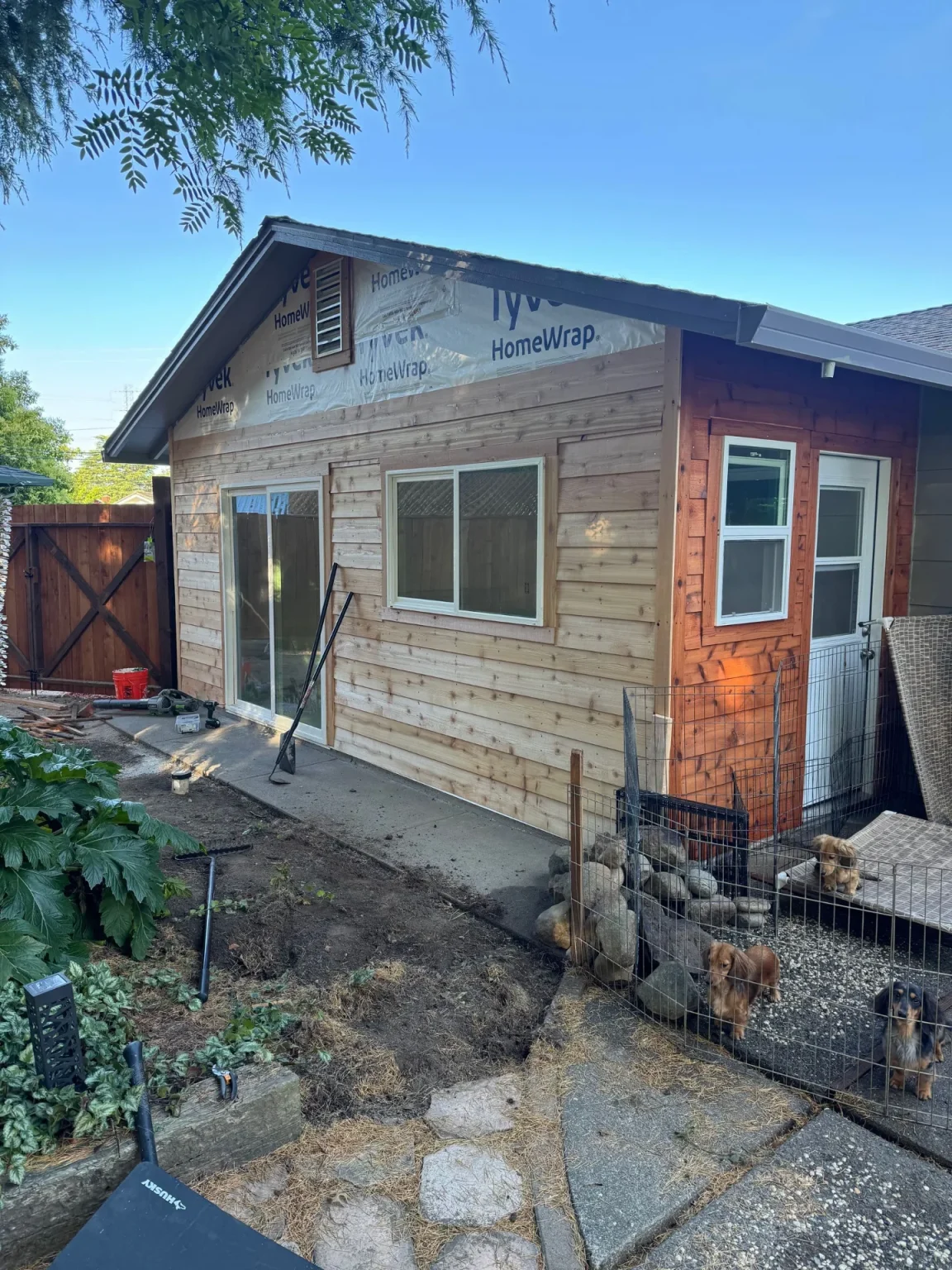
Prep is when hidden damage shows up. Soft trim under a window, a split board near the ground, a cracked sill. Fixing it now is much easier than fixing it after it has been painted over.
4. Caulking and priming
Gaps around windows, doors and trim let water in behind the siding. Fresh caulk seals them. Then any bare wood and every repair gets primer, which seals the surface and gives the top coat something to hold on to.
5. Protecting everything else
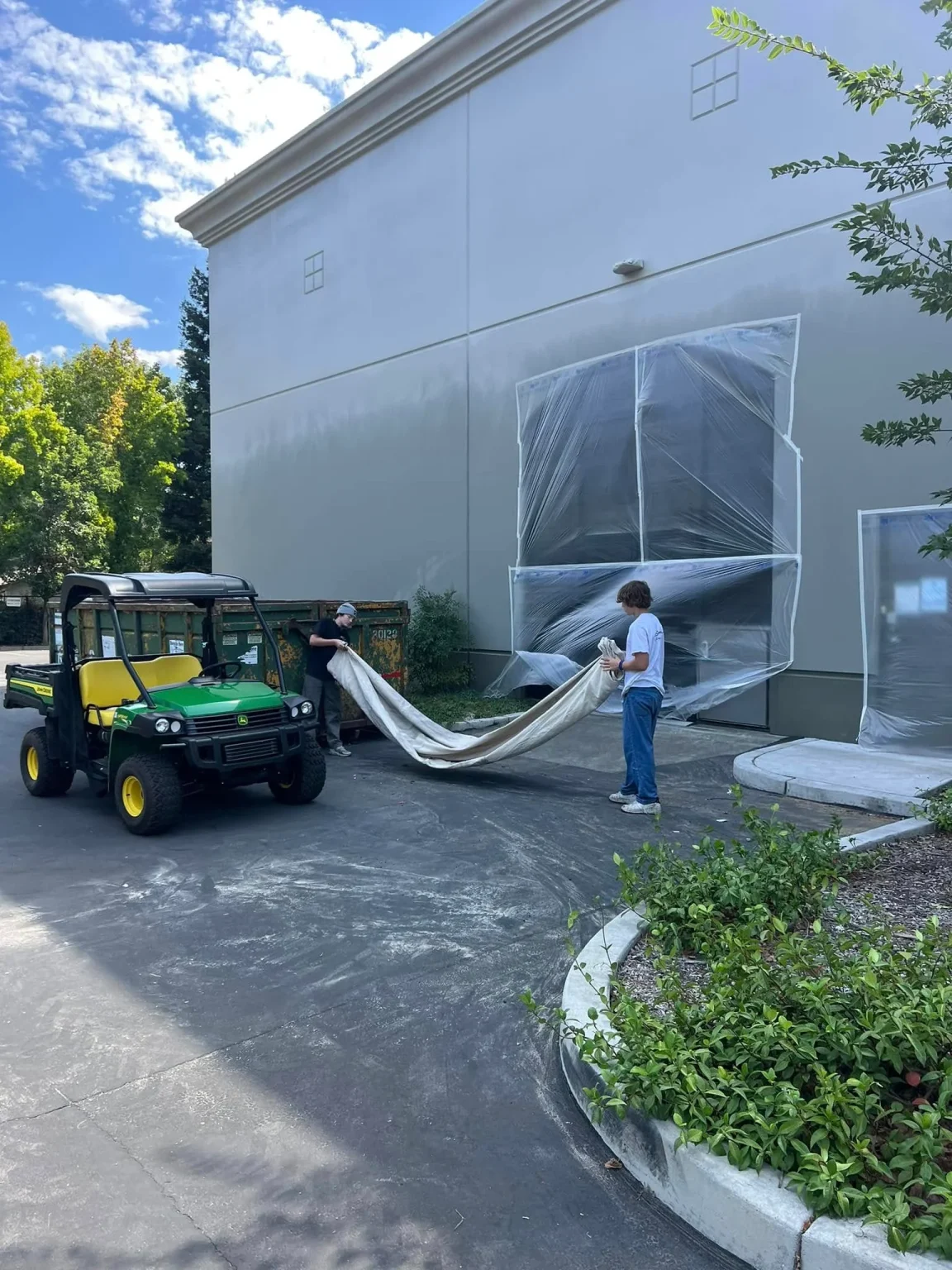
Windows, doors, roofs, plants, walkways and floors all get covered before the paint comes out. On a commercial building that also means planning around entrances and people coming and going.
Questions to ask any painter about prep
Two estimates can look similar on paper and be very different jobs. Asking these questions makes it easy to compare:
- Is washing included, and how will you wash my type of siding?
- How will you handle loose or peeling paint?
- What happens if you find rotted wood?
- Will bare wood and repairs be primed?
- How will you protect my windows, plants and walkways?
- Will you walk the finished job with me?
We are happy to answer every one of these with your estimate. You can see how we approach interior and exterior painting, or simply ask for a free estimate and we will walk you through the plan for your home.
Common questions
How long should prep take?
It depends on the size of the house and its condition. A home that was painted on schedule needs much less prep than one with peeling paint and damaged wood. We include the prep plan in your estimate.
Is power washing safe for my siding?
Yes, when it is done with the right pressure for the material. We adjust our approach for wood, siding, stucco and concrete.
Do I need to be home during prep?
Usually not. We will talk through access, pets and anything else we need to know before work begins.