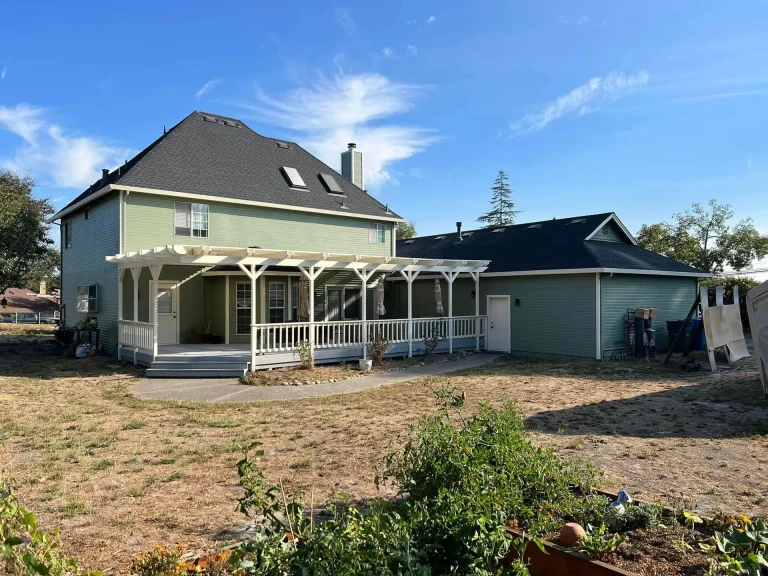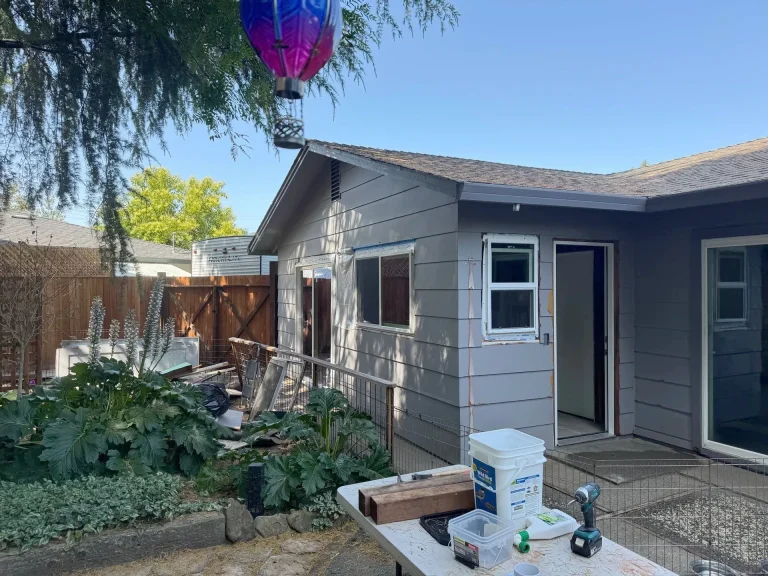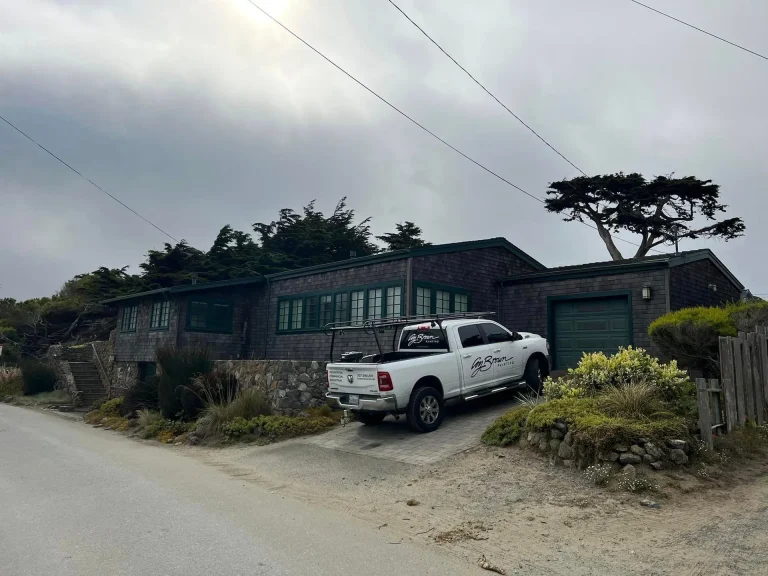
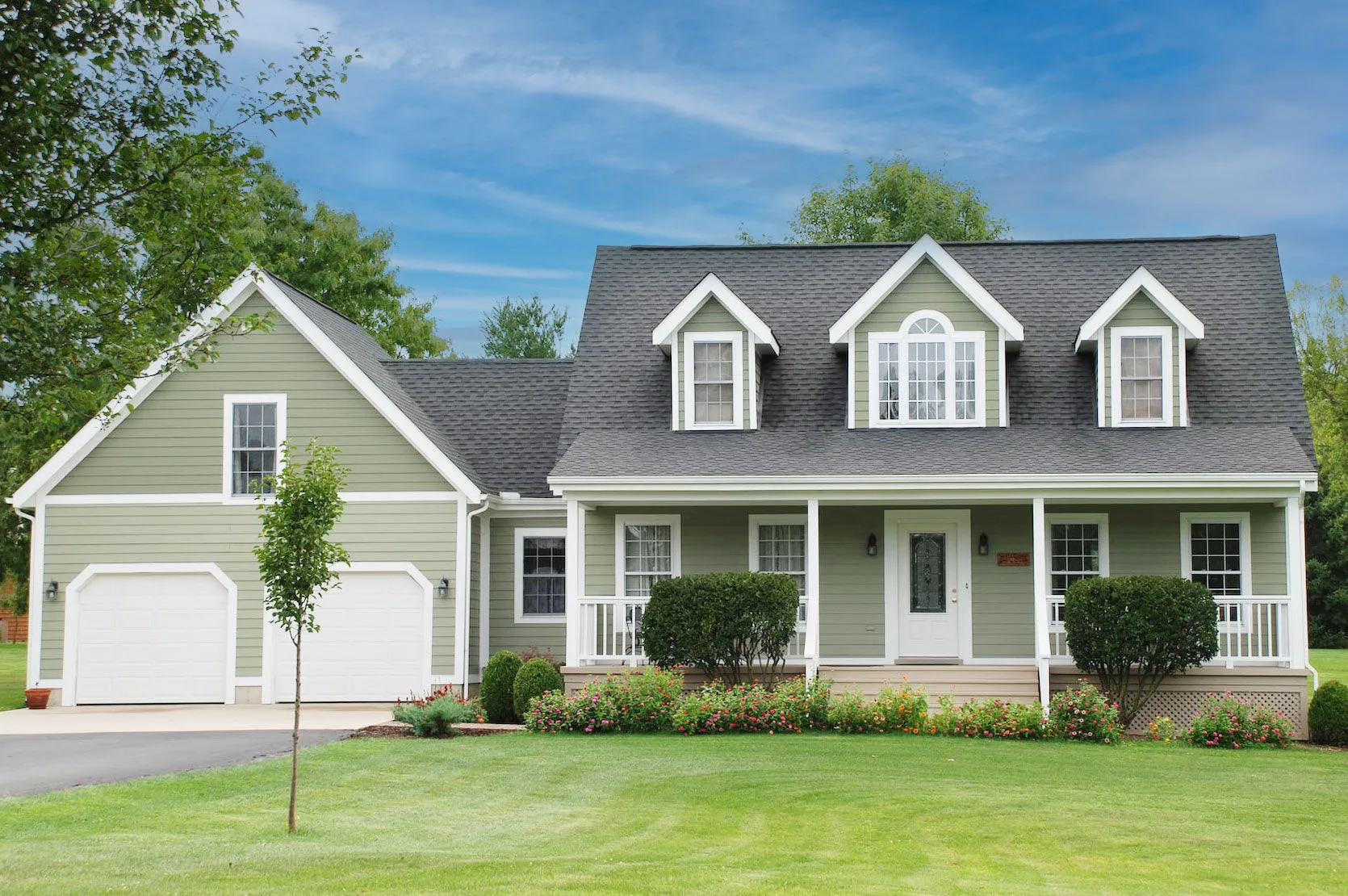
For most painted wood siding in the North Bay, plan on a repaint every 5 to 10 years. Stucco usually lasts longer. Stained wood needs care more often. Walls that face south and west almost always wear out first.
What wears paint out around here
We have painted homes from Bodega Bay to Napa since 1979, and the same few things show up again and again.
- Sun. Summer sun is hard on paint. It fades color and breaks down the binder that holds the paint together, so south and west walls go chalky years before the shady side does.
- Fog and moisture. Closer to the coast, around Sebastopol, Occidental and Bodega Bay, damp mornings feed mildew and keep wood wet longer.
- Wet winters, dry summers. Wood swells in the rain and shrinks in the heat. That movement opens up caulk joints and cracks old paint.
- Sprinklers and plants. Shrubs that touch the siding and sprinklers that hit the walls keep the bottom few feet of a house wet all year.
Six signs your house is ready
Walk around the outside on a clear day and look closely. If you see two or three of these, it is time to start planning.
- Color looks washed out, or a chalky powder comes off on your hand when you rub the siding
- Paint is cracking, curling or peeling, especially on trim and window sills
- Gaps have opened in the caulk around windows, doors and corner boards
- You can see bare wood anywhere
- Dark spots of mildew keep coming back on the shady side
- Wood feels soft when you press it with a screwdriver
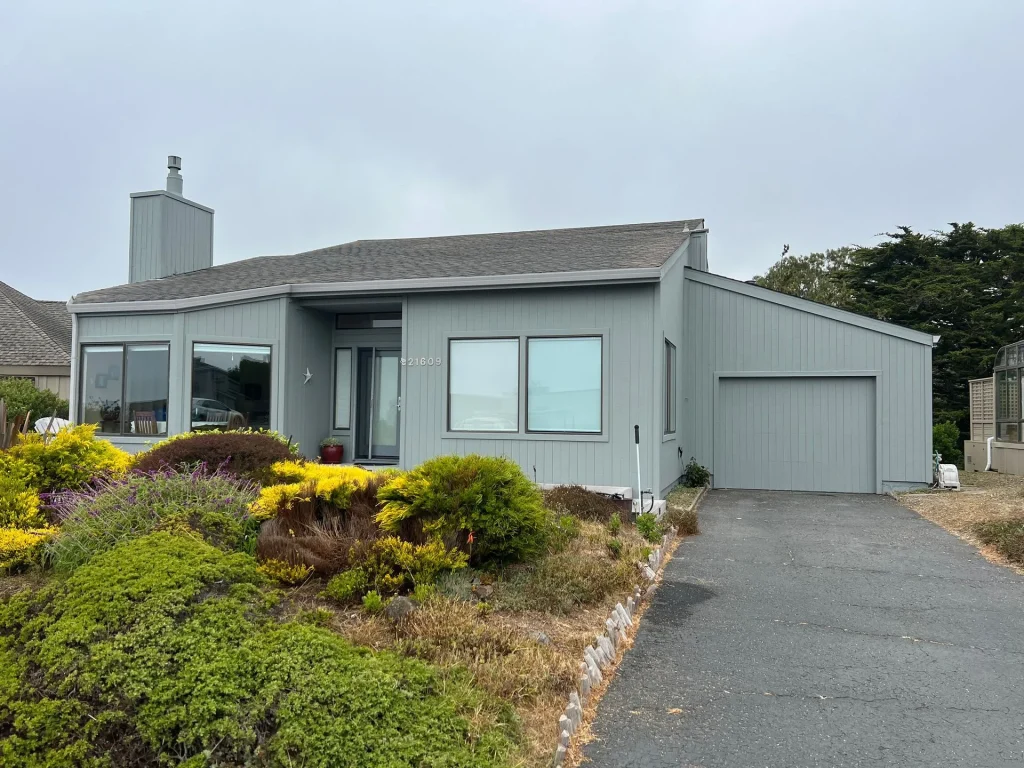
That last sign matters most. Soft wood means water has already gotten in, and painting over it only hides the problem for a season. Rotted boards, trim and sills need to be replaced first.
Waiting too long costs more than the paint
A house painted on time mostly needs a good wash, light scraping and a little caulk. Wait a few extra years and the job changes. Peeling turns into bare wood, bare wood soaks up water, and water turns into rot. Now the estimate includes carpentry, more primer and a lot more prep hours.
In other words, the cheapest paint job is usually the one you do a year early, not a year late.
How to make your next paint job last longer
- Start with a clean surface. Paint does not stick well to dirt, mildew or chalk. A proper power wash before painting is one of the cheapest ways to add years to the finish.
- Paint in the dry season. Late spring through early fall is the best window here. Wood needs to be dry, and paint needs mild temperatures to cure.
- Do not skip primer on bare wood. Primer seals the wood and gives the top coat a good grip.
- Trim back plants and adjust sprinklers. Keep a little air between your landscaping and your siding.
- Wash the house every year or two. A gentle rinse keeps dirt and mildew from building up between paint jobs.
Not sure if your house can wait?
That is exactly what a free estimate is for. We will walk every side of the house with you, point out anything that needs repair, and tell you honestly if it can wait another year. Take a look at our residential painting work, or request your estimate and we will set up a time.
Common questions
What time of year is best for exterior painting in Sonoma County?
Late spring through early fall is usually best. Surfaces need to be dry and temperatures mild so the paint can cure properly. We plan each schedule around the weather.
Can I paint only the sides that get the most sun?
Sometimes. If the rest of the house is in good shape, painting the worn sides first can make sense. Colors may not match perfectly, so we will tell you what to expect before you decide.
Do you check for damaged wood before painting?
Yes. Inspecting and repairing siding and trim is part of our prep, and we will show you anything we find before we fix it.